
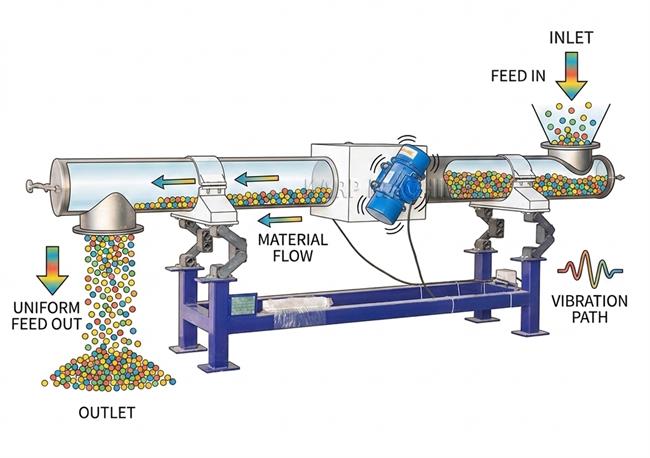
A tubular vibratory feeder provides a simple way to move and feed bulk materials. It uses vibration to move materials forward through a closed tube. This design offers stable feeding and works well in many production lines.
Stable Feeding for Different Materials
Powders and granules can be difficult to feed at a steady rate. Material may flow too fast or build up at the feeding point. Therefore, a stable feeding system is important for continuous production.
The tubular structure keeps material moving along a fixed path. At the same time, vibration helps maintain an even material flow. This makes the feeder suitable for powders, granules, pellets, and other small bulk materials.
Key Advantages
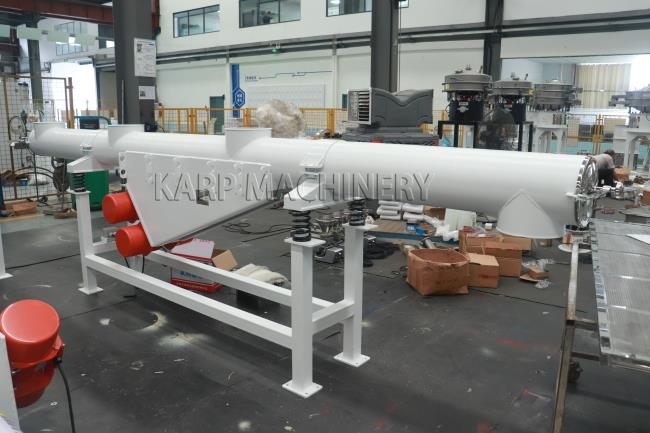
A tubular vibratory feeder offers several benefits:
* Stable material flow for continuous production
* Enclosed conveying path to help control dust
* Compact structure for areas with limited space
* Easy connection with screens, conveyors, hoppers, and other equipment
* Simple design for easy cleaning and maintenance
* Suitable for many materials, including powders and granules
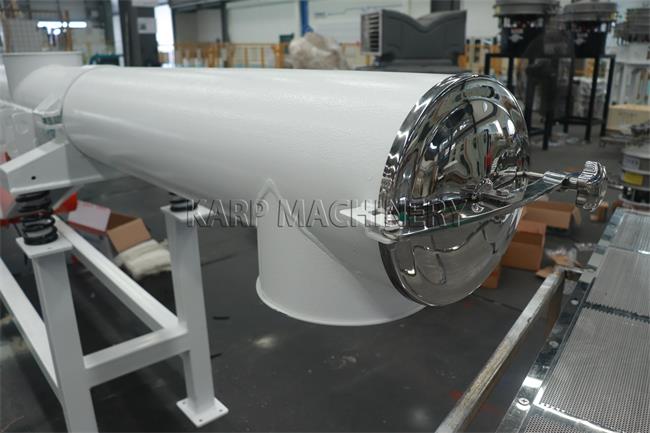
In addition, the enclosed tube helps protect the material from the surrounding environment. This can be useful when the production process requires a cleaner conveying path.
Wide Range of Applications
Tubular vibratory feeders can work in many industries. Common applications include food processing, chemical production, pharmaceutical materials, plastics, minerals, and recycling.
For example, the feeder can send material from a storage hopper to a vibrating screen. It can also provide a steady feed to a conveyor, crusher, mixer, or packaging machine. As a result, it can become an important part of an automatic production line.
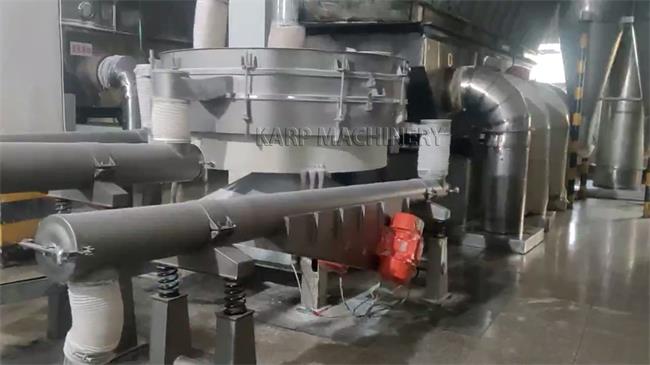
For dusty materials, we can also customize the structure and connections based on the customer's process. This helps create a more enclosed and controlled feeding system.
A customized tubular vibratory feeder can improve feeding stability while saving installation space. With different sizes and configurations available, we can design the feeder to match the customer's material and production requirements.